Do You Need Lofting to Build a Dory?
Not if you have the right plans. Lofting is the process of scaling small drawings up to full-size patterns. It is the single biggest barrier for first-time boat builders. Plans that give you every measurement at full size skip it entirely.
What Lofting Is
In traditional boat building, plans come as small-scale drawings with a table of numbers called offsets. Before you can cut a single piece of wood, you have to redraw the entire boat at full size on a shop floor or large sheet of plywood. You plot points from the offset table, connect them with a flexible batten to create fair curves, then make patterns from those curves. That is lofting.
It is a real skill. Experienced builders do it as a matter of course. But for someone building their first boat, it is confusing, time-consuming, and easy to get wrong. One bad measurement in the offset table and your hull comes out twisted. One customer told us he read 20 pages from other experts on lofting and was still confused.
How to Avoid It
The trick is choosing plans that do the lofting for you. Instead of offset tables and scaled drawings, you want plans that give you every measurement directly: the exact length of every plank, the exact angle of every cut, the exact shape of every frame. Measure the number from the plans, mark it on your lumber, cut. No scaling, no plotting, no floor space needed.
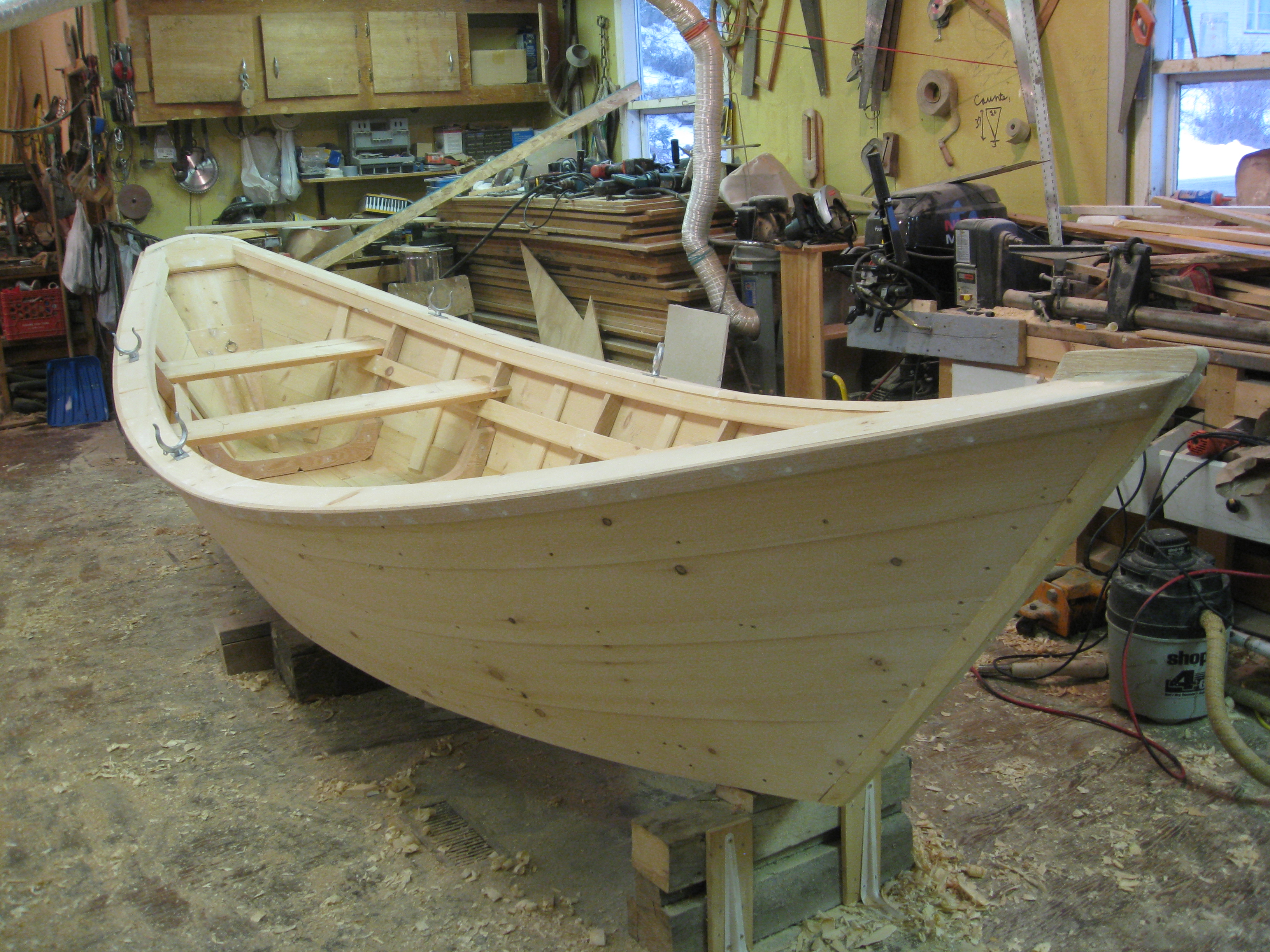
Traditional dory builders in Newfoundland and Gloucester never used offset tables either. They worked from patterns and battens, building the shape by eye and experience. The dory was designed to be built by working fishermen, not naval architects. A good set of modern dory plans captures that same directness.
Why It Matters
Lofting adds days to a build before you even pick up a saw. It requires a large, flat floor space. It introduces a whole category of errors that have nothing to do with your woodworking ability. If you can avoid it, you should.
Our plans require zero lofting. Every measurement, every angle, every cut is spelled out with photos. You go straight from the plans to the saw.
See the Full Plans