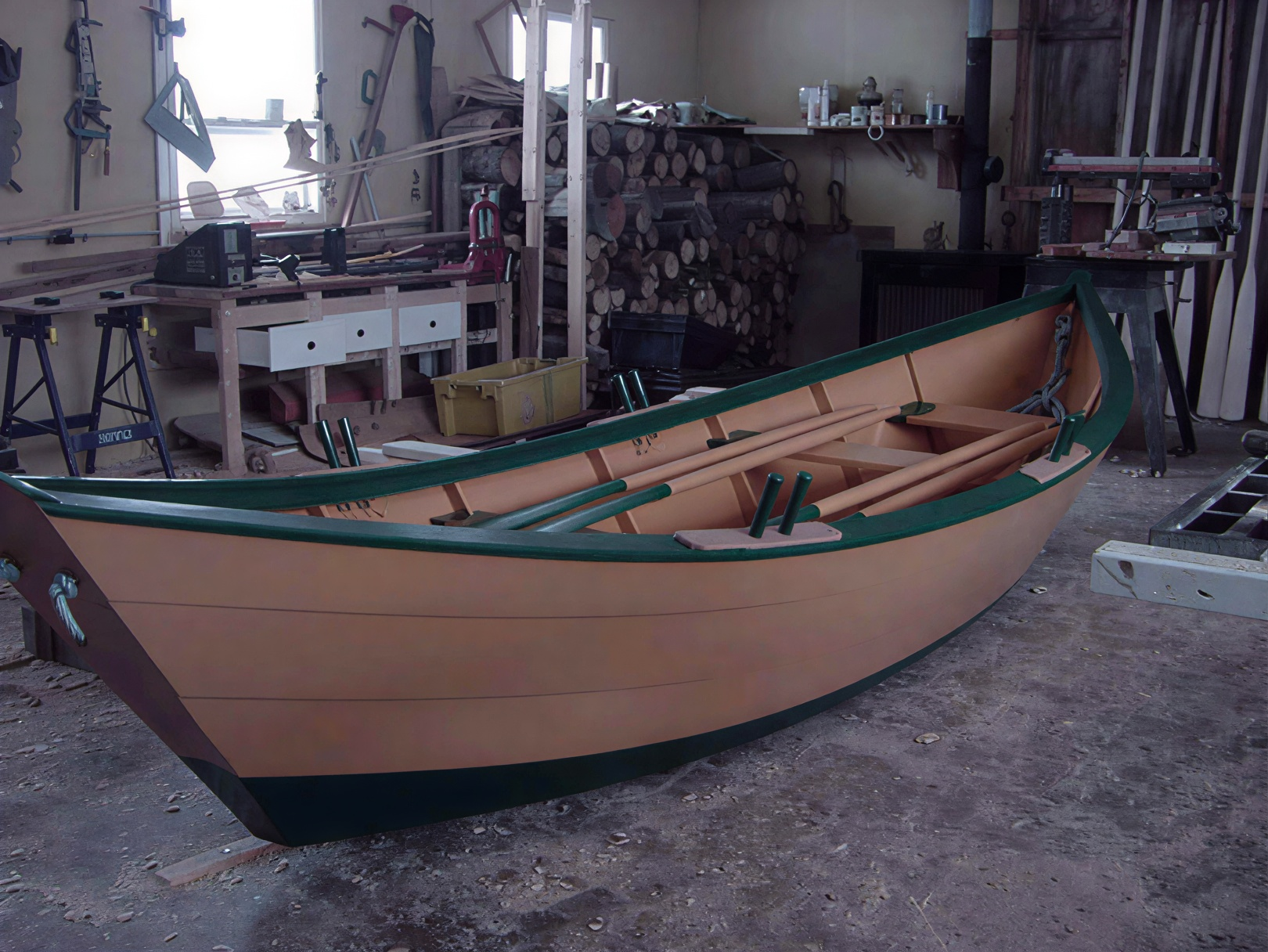
Step-by-step plans from a master with 72 years of experience - 63 photos of every building step, every measurement, every cut. Even if you've never held a saw in your life.
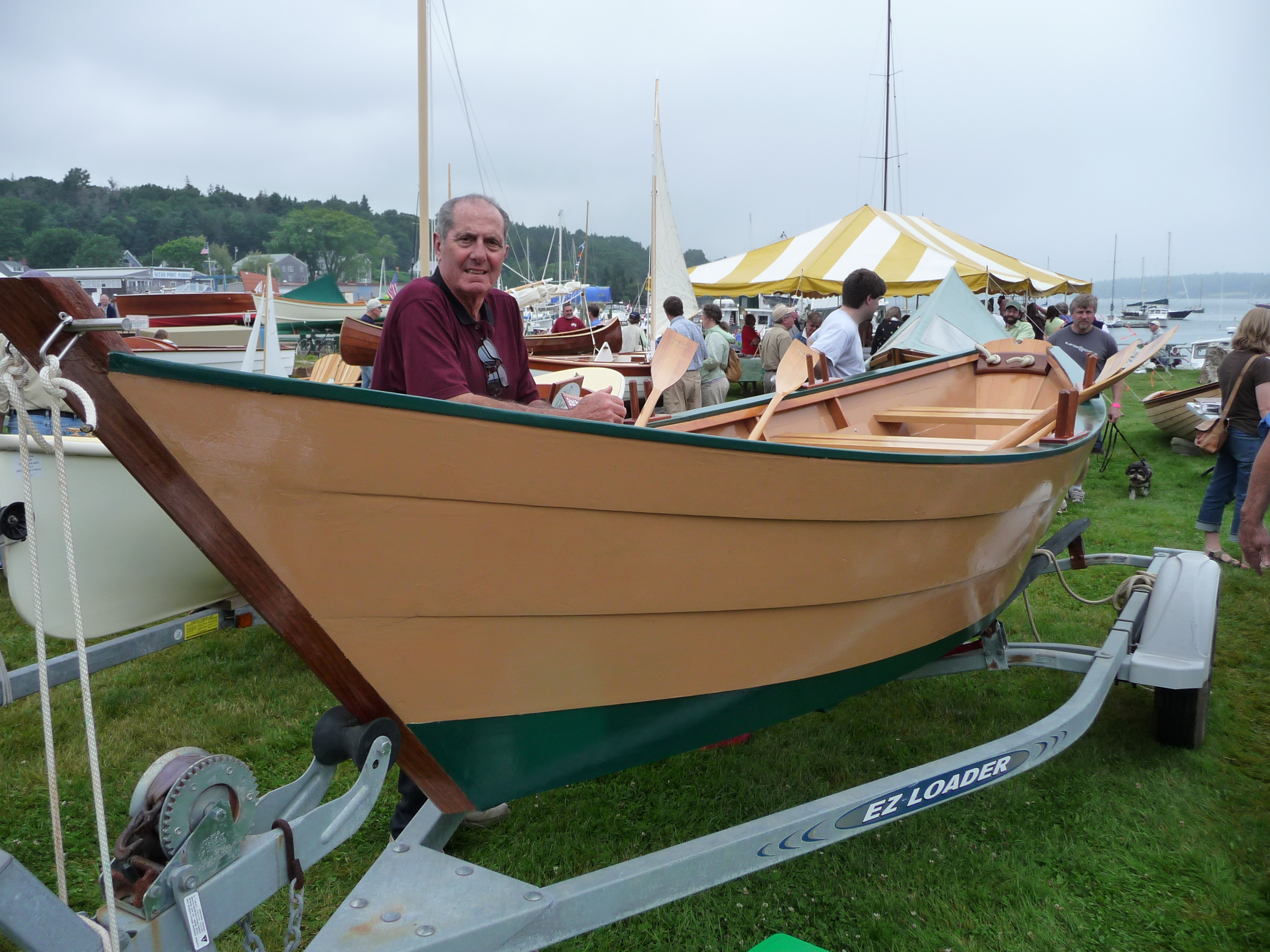
This beautiful boat was built from our plans. See others like it →
Maybe you found a set of plans that looked promising - until you opened them. Technical drawings. No photos. Instructions that assumed you already knew how to "loft a hull" or "read lines drawings." Jargon with no explanation, and nobody to ask.
Or you found a set of plans online for $37. A few sheets of drawings, no written instructions, no support. When you had a question, there was nobody to ask.
Or worse - you came across one of those "518 boat plans for $37" packages. Clip-art quality drawings. No support. No real instruction.
And then there are the workshops. The good ones cost $3,500 or more in tuition alone - plus weeks away from home, plus accommodation, plus travel. If you can even find one.
Here's the thing nobody in this industry wants to say out loud: most boat plans aren't built for beginners. They're built by experienced boat builders, for experienced boat builders. If you already know how to loft a hull and read line drawings, they're fine. If you don't? You're on your own.
You'll read in forums that traditional timber-planked dories are harder to build than plywood stitch-and-glue. That's only true when you're working from a technical drawing with no guidance. When 63 photographs walk you through every single cut - taken by someone who watched a master do every one of them over 72 years - traditional timber is no harder. And the boat you end up with is the real thing: built the way they've been built on the Grand Banks for centuries, not a plywood box coated in epoxy.
But what if someone with 72 years of experience - a man who's built more wooden dories than just about anyone alive - sat down beside you and walked you through every single step? Every cut. Every measurement. Every mistake to avoid. With a photo of exactly what it should look like at every stage.
If you've looked at other plans online and aren't quite satisfied - keep reading. Here's what most of them don't have.
I want to tell you about my friend Wilbert.
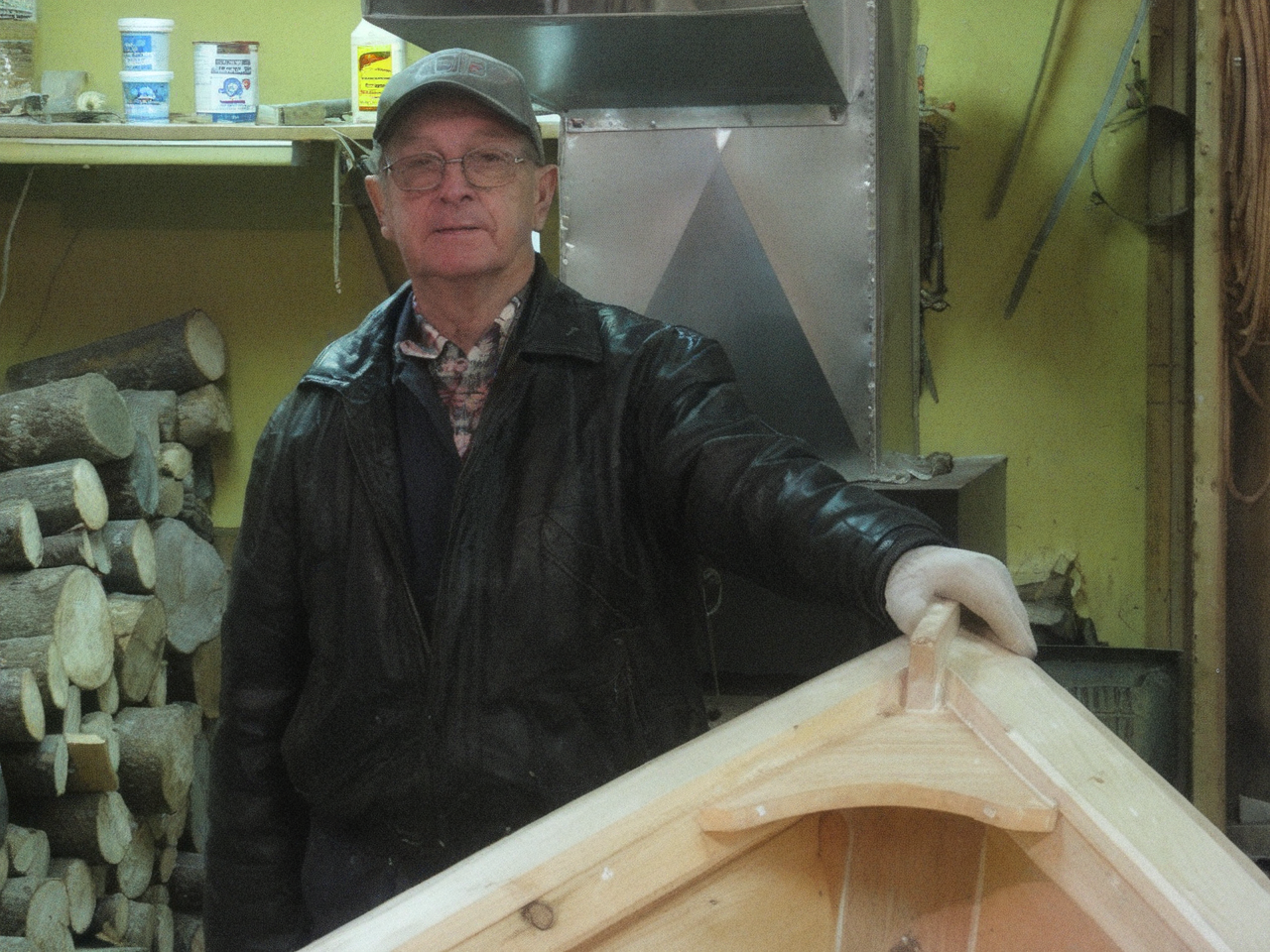
Wilbert Weir is a master carpenter from Little Bay Islands, Newfoundland - a tiny fishing village on the northeast coast of the island. He built his first wooden dory at the age of 16. He didn't stop building them until he was 88.
That's 72 years of building wooden dory boats. In one 8-year stretch, he built 54 of them - by hand, one at a time.
He learned from his father, who was a fisherman on the Grand Banks. His father learned from his father before him. That's four generations of boat builders, going back to the days when the dory was the workhorse of the North Atlantic - the boat that fed families, built communities, and survived some of the roughest water on earth.
Now, Wilbert is 97 years old. He's no longer building. Little Bay Islands underwent government resettlement a few years back - the community is gone. And with it, the living tradition of building these boats the old way, by hand, from timber.
Without these plans, everything Wilbert knows would have been lost forever.
But let me back up. At 88, Wilbert called me up and said something I'll never forget:
"Fraser, I want to teach people how to build wooden dory boats. And
I want to make it so easy that
anyone can do it."
- Wilbert Weir
Now, Wilbert isn't exactly the type of guy who stands in front of a classroom in fine academic attire. So I asked him: "Just how do you plan on doing that?"
His answer: "Well, you have a Bachelor's degree in English and a Master's in Business. And I've built more wooden boats than anyone else I know. I can teach anyone how to do it - if you'll write it up."
And that was that. No half measures with Wilbert.
So he built a 16-foot Grand Banks dory from scratch - one of his best - and wrote down everything he did. Every measurement, every cut, every technique he'd learned over 72 years. He filled 237 pages of handwritten notes on yellow notebook paper, scraps of plywood, even the back of some sail cloth.
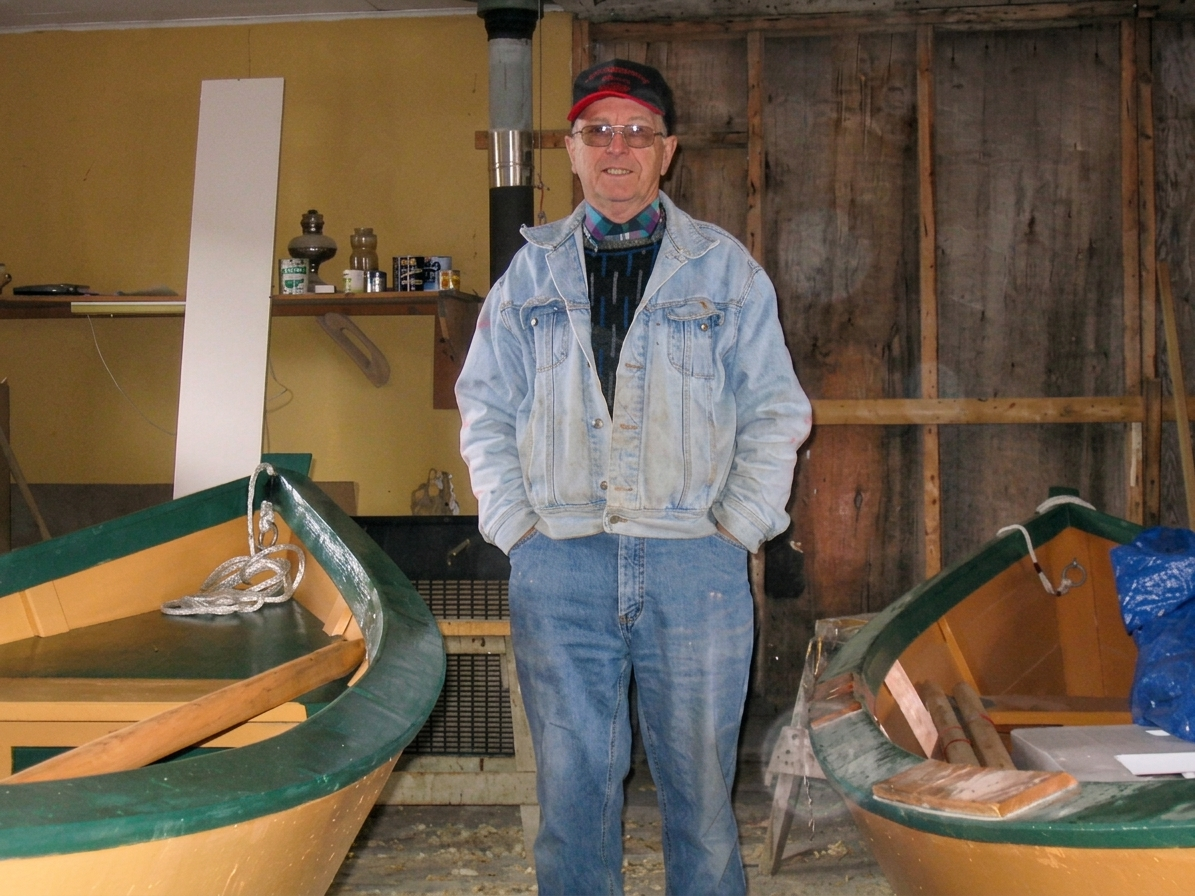
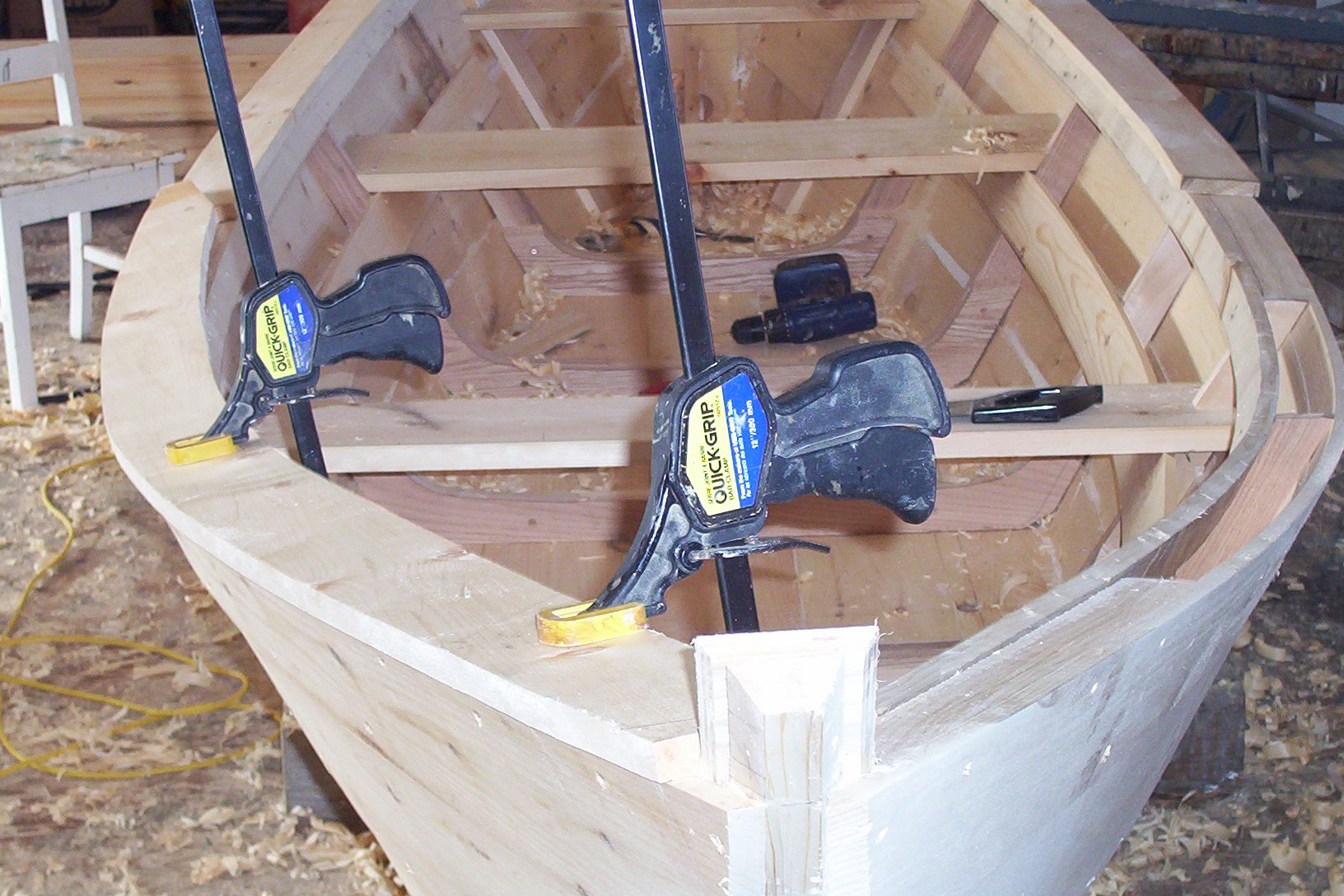
Meanwhile, I photographed every single building step. Crystal-clear digital photos. Wilbert's instruction was clear: "I want the pictures to be so detailed that even if we didn't say a word, anyone could build a boat just by following them."
Then I took his 237 pages of notes and locked myself in my basement workshop for two months compiling, editing, and formatting them into a proper set of plans.
When I finally handed the "finished" plans to Wilbert, he sat down in a quiet place and reviewed them. He later told me he read them 8 times before he was done.
His verdict? "These dory plans are good, but not as good as they need to be."
He sent me back with a list. Make it easier for beginners. Explain the tools better. More photos. More drawings. Explain what wood and why. Detail the planking techniques. Include his tips and tricks.
So we went back to work. And again. And again.
In total, we made 36 complete rewrites of the "finished" plans. Each rewrite contained 12–24 revisions. That's roughly 800 total edits.
I finally got his approval. The plans were the absolute best they could be, as far as this master builder was concerned.
And when Wilbert says "these dory plans are perfect," you had better believe it.
No guesswork. If we tell you to do something, we show you exactly how to do it.
Free Download
See exactly what lumber, fasteners, and tools you'll need - and check local availability - before you spend a dollar. Fraser will email it to you instantly.
No spam. Just the list. Unsubscribe any time.
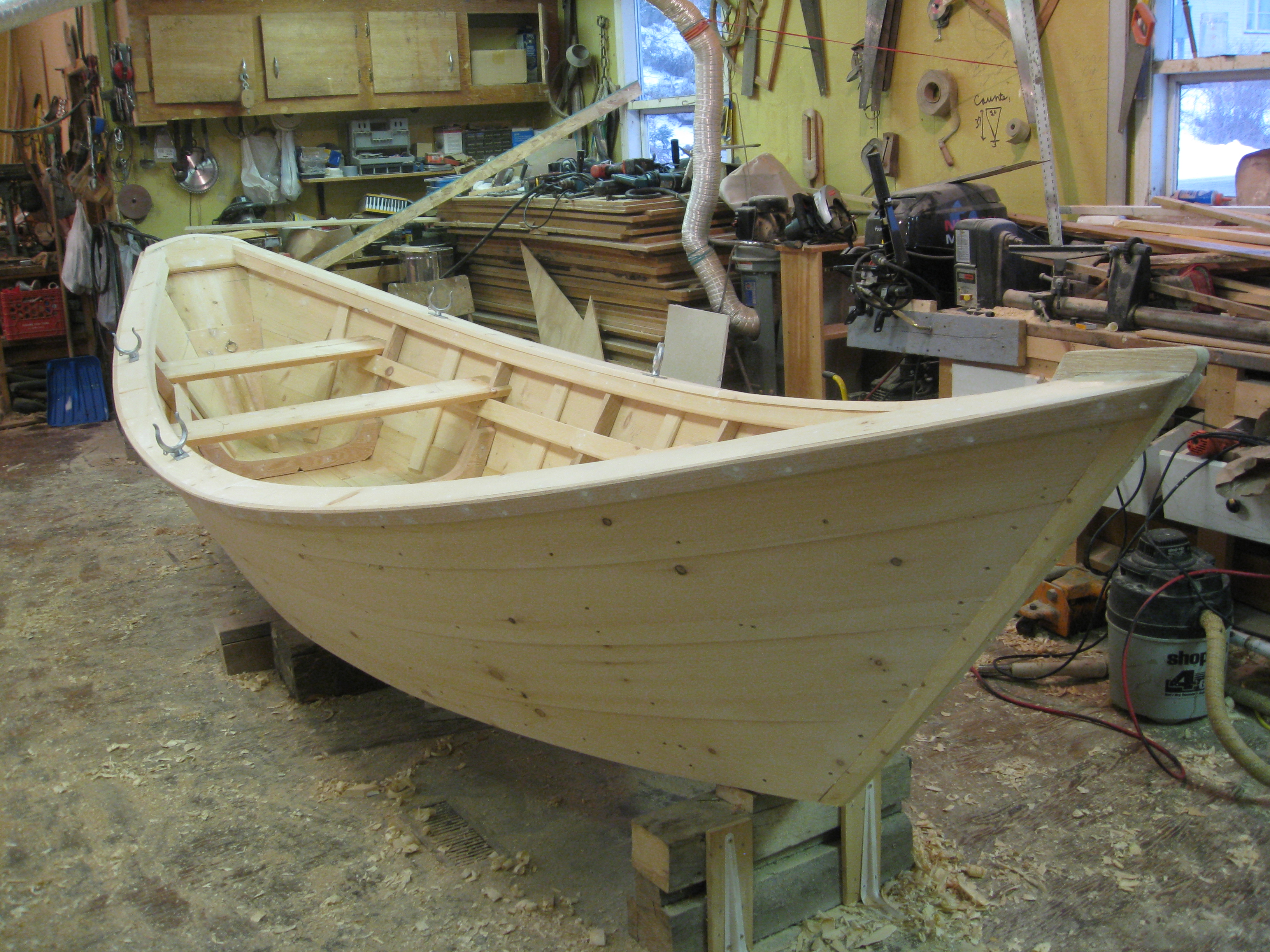
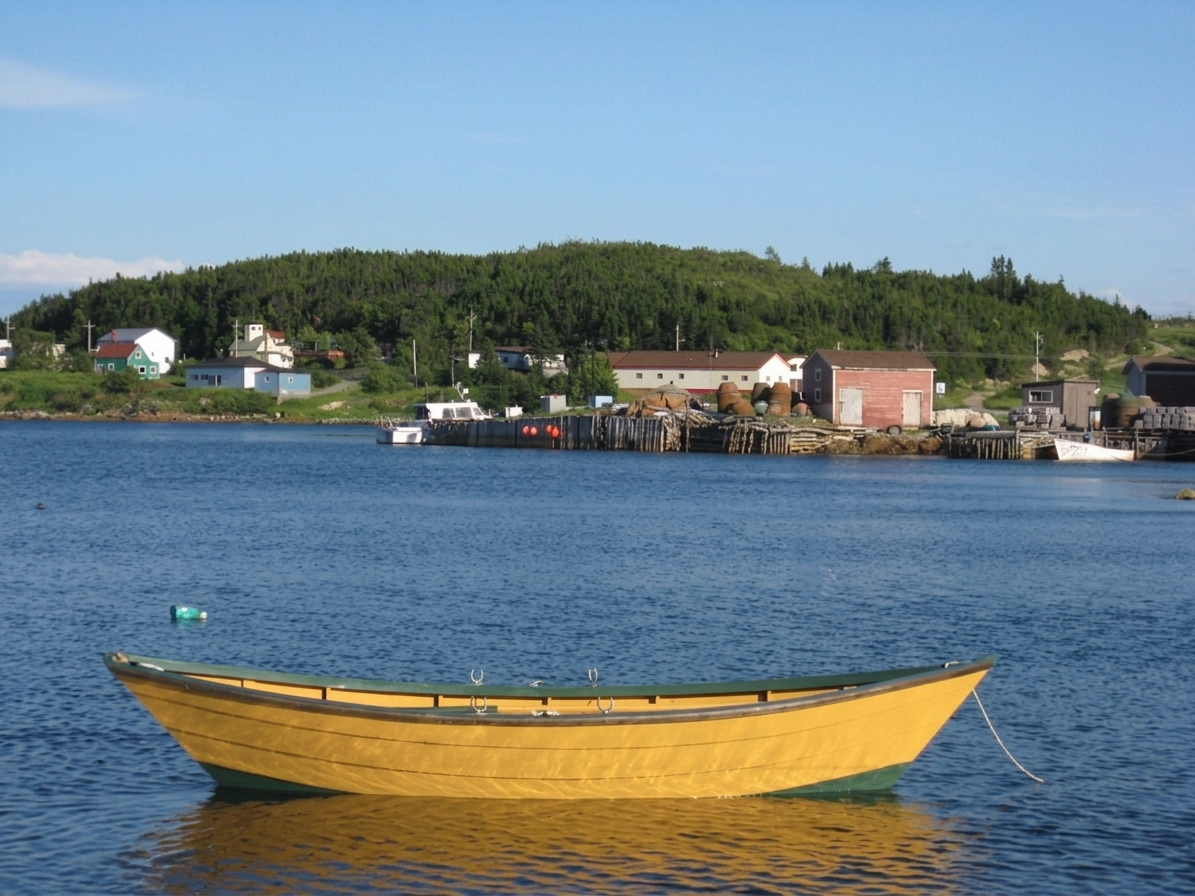
Let me be clear about something: this isn't a model. It's not a decoration for your yard (but it would look amazing). It's a real, functional 16-foot Grand Banks fishing dory - built the traditional way with timber planking, the same method that's been used on the Grand Banks for centuries.
This is the same boat that fed families across Newfoundland for generations. It holds up to 1,200 pounds. You can row it, motor it, sail it (with the optional sail drawings), or just sit in it on a quiet lake and feel proud of what you built.
This is a traditional timber-planked Grand Banks dory - not a plywood kit, not a stitch-and-glue shortcut. Built from locally sourced hardwood and softwood using the same methods Newfoundland fishermen have used for generations. If you've been looking for dory boat plans that treat you like an adult, you've found them.
Imagine the day you pull this boat into the water for the first time. The sun on your face. The quiet lap of water against the hull. And the deep, unshakeable pride of knowing that you built every single plank with your own two hands.
Human beings are creative animals. We weren't put on this earth to sit at desks, stare at screens, and idle in traffic.
We were put here to build things. To make something from nothing with our own two hands.
The happiest people you know aren't the ones with the fanciest gadgets or the biggest salaries. They're the ones who are making something. Growing something. Building something.
Wilbert spent 72 years in the shop - but the way he talks about it, it was never really about the boats. It was the work itself. The people alongside him doing it. He'll tell you about a neighbour who came to learn and ended up staying for years, or a son who built his first dory beside his father. Those are the stories he comes back to.
That kind of satisfaction doesn't come from buying things. It comes from making them.
When you build this dory, you're not just building a boat. You're reclaiming something the modern world has quietly taken from you - the deep, bone-level contentment of creating something with your own hands.
Every one of our customers who's tried other plans - technical drawings, free plans online, "$37 for 500 plans" collections - says the same thing. Here's why there's no comparison.
| DoryPlan | Other Plans ($50–$344) | Workshops ($6,000+) | "518 Plans" Collections | |
|---|---|---|---|---|
| Step-by-step photos |
✓ 63 photos |
✗ | ✓ | ✗ |
| Written instructions |
✓ Every step |
Minimal | ✓ | ✗ |
| Beginner-friendly | ✓ | ✗ | ✓ | ✗ |
| No lofting required | ✓ | ✗ | ✓ | ✗ |
| Personal support | ✓ Unlimited | ✗ | In-person only | ✗ |
| Traditional timber build | ✓ | Varies | ✓ | Varies |
| Price | $79 | $50–$344 | $6,000+ | $37–$67 |
This is a real project - you deserve real answers before you commit. Here are the questions I hear most often.
There are good plans out there. The difference is what's included. Most boat plans - even from reputable sellers - are technical drawings with some written instructions. They assume you already know what you're doing. If you don't know how to loft a hull or read a lines drawing, you're going to get stuck.
These plans were built specifically so that someone who has never built a boat - never even thought about it - can pick them up and follow them from first board to finished boat. If you get stuck, email me and I answer personally.
As one customer put it: "I've read 20 pages from experts on lofting and still been confused. You gave me a better understanding in a few sentences."
See full answer →That's exactly who these plans were built for. Wilbert's standard - the one he held us to through 36 rewrites - was that a complete beginner could build a professional quality dory in seven to ten days. Most hobby builders working partial weekends finish in four to eight months.
The 63 photos mean you can follow along visually even if you've never read a boat plan in your life. And if you get stuck, email me - I respond personally to every question.
See full answer →You don't need them. Every tool used in the build is photographed in the plans - they're standard hand and power tools you likely already own or can pick up at any hardware store. No specialty boat-building equipment. No expensive jigs. If you have a saw, a drill, a hammer, and a few clamps, you're most of the way there.
See full answer →Yes. The plans list multiple wood species for each part of the boat. For timbers and the stem, you can use any suitable hardwood - oak, birch, maple, or juniper. For planking and the bottom, use any softwood - pine, cedar, spruce, or fir. You can even use marine plywood for the bottom if you prefer.
One of our customers in Australia couldn't find the exact species and adapted with local timber and marine plywood. His dory turned out beautifully - light, waterproof, and exactly to spec. The plans are designed to work with what's available near you.
Not sure what's available near you? Get the free materials list →
See full answer →Email me. I'm Fraser - I compiled these plans, I know them inside and out, and I respond personally to every question. Before your purchase, during your build, or five years from now when you decide to build a second one. There's no time limit and no limit on questions.
That's the single biggest reason these plans exist. Wilbert refused to approve them until every step was clear enough for someone who'd never held a boat plan before. 36 rewrites. 800 edits. 63 photos.
As Paul from Massachusetts put it: "I've read 20 pages from experts on lofting and still been confused. You gave me a better understanding in a few sentences."
See full answer →Let's look at it this way. If Wilbert had taught boat building in his workshop at Little Bay Islands, the total cost would have been somewhere around $6,000 - $3,500 in tuition plus 30 nights of accommodation at $79/night. And you'd still have to get there.
When Wilbert was actively building dories, the price for him to build you an identical 16' Grand Banks Dory started at $3,000. And then you'd have to ship it.
Competitor plans - just technical drawings, no photos, no support - cost $50 to $344.
At $79, you're getting the complete knowledge of a master builder with 72 years of experience, 63 photos, 12+ drawings, every measurement, unlimited personal support, and a 60-day money-back guarantee. We're asking less than 1% of what this knowledge would have cost in any other form.
See full answer →This is a real Grand Banks fishing dory with a 1,200-pound carrying capacity. It's built the same way these boats have been built for centuries - the same way that fished the Grand Banks, survived North Atlantic storms, and fed Newfoundland families for generations.
Customers have completed builds in the USA, Canada, Australia, and New Zealand. These boats aren't sitting in garages - they're on the water.
See full answer →More questions? See the full FAQ for answers on wood types, costs, tools, dimensions, and more.
Learn in person: $6,000+ • Buy finished: $3,000+
Or build your own starting at $79 Professional plans. Amateur friendly.
Fraser Wheaton's Personal Guarantee
Download the plans. Read through them carefully. Check if the tools and materials are available near you. Take your time.
If for any reason you're not completely satisfied, email me and get a full refund. No hassle, no hoops to jump through. Physical book orders require return of the book to us.
I want you to review these plans risk-free - before you spend a single dollar on building materials. That's how confident Wilbert and I are in what we've built.
An order here is simply an opportunity for these plans to sell themselves to you. There is no sale - no obligation to keep them - until you've used them and are satisfied.
We live in a fast-paced world. Our kids and grandkids spend more time on screens than any of us would like. We've forgotten the pure joy and satisfaction that comes from creating something with our own two hands.
Building a boat changes that. It's a project that pulls you away from the noise and puts you in a workshop with the smell of fresh-cut wood and the quiet satisfaction of doing real work. And if you build it with your kids or grandkids, it becomes something they'll remember for the rest of their lives.
Twenty years from now, they won't remember another weekend on screens. But they'll remember the boat.
Your first boat starts here.
Start Building - Get the Plans for $79 60-day guarantee · Instant download · Unlimited support from Fraser